
Cover Story
Precision in paradise: the Dominican Republic emerges as Latin America’s medtech hub
The Dominican Republic is emerging as a strategic nearshoring hub for the US, driven by a rapidly expanding medical device manufacturing sector enjoying industrial free zones, tax incentives and international trade agreements, writes Bernard Banga.
Powered by



Video credit: pablopixel / Freepik
Cover Story
Precision in paradise: the Dominican Republic emerges as Latin America’s medtech hub
The Dominican Republic is emerging as a strategic nearshoring hub for the US, driven by a rapidly expanding medical device manufacturing sector enjoying industrial free zones, tax incentives and international trade agreements. By Bernard Banga.

Agentic AI in medicine supports multitasking across clinical tools, data and workflows to improve decision-making and efficiency. Credit: Volodymyr Horbovyy / Shutterstock
Long known for its agricultural exports and appeal as a tourist destination, the Dominican Republic has significantly diversified its economy over the past decade, emerging as a growing force in the medical device manufacturing sector.
The country now ranks as the third-largest exporter of medical devices in Latin America, with shipments reaching a record $2.25 billion last year. Medical devices accounted for 31 per cent of total free zone exports, with the majority destined for the United States, China, and the Netherlands.
Leveraging its geographic proximity to the US, the Dominican Republic has positioned itself as a key beneficiary of the nearshoring trend - the strategic relocation of manufacturing and supply chain operations closer to primary markets. This shift has enabled the country to attract increased investment from global medtech firms seeking supply chain resilience and cost efficiency in the post-pandemic landscape.
Strategic deployment of industrial free zones
Since the 1980s, the Dominican Republic has built an extensive network of 92 industrial free zones, now home to more than 850 companies. These zones contribute over 5 per cent to national GDP and account for more than 60 per cent of total exports.
Fifty of these zones host medical device manufacturers, reflecting the sector’s growing strategic importance. Leading global firms - including Medtronic, Edwards Lifesciences, and Johnson & Johnson - operate manufacturing or subcontracting facilities in the country.
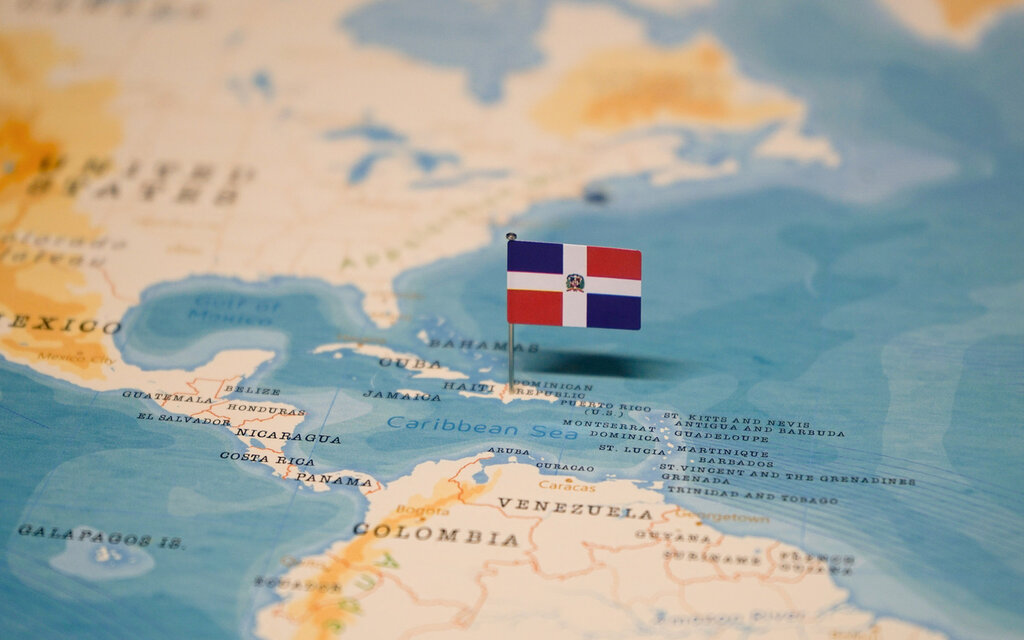
Dominican Republic free zones: key hubs of medical device manufacturing and export. Credit: hyotographics / Shutterstock.com

Bhavik Patel, president, IQVIA Commercial Solutions
Companies are drawn by a combination of favourable tax and customs incentives, along with access to a skilled and cost-competitive workforce, positioning the Dominican Republic as an increasingly attractive destination for medtech investment in the region.
Tax incentives and free-trade agreements
Industrial free zones in the Dominican Republic offer total exemptions from local and national taxes. “guaranteed for 15 years and … renewable”, explains Carlos Felipe, founding partner at Carlos Felipe Law Firm SRL, a local specialist corporate law firm.
Exemptions also apply to the import of machinery, raw materials, production equipment and consumables.
Exports of medical devices are further supported by strategic trade agreements with the US and EU. Under the Caribbean Basin Initiative (CBI), products manufactured in free zones can be exported to the US with reduced lower tariffs (see box 2). Similarly, the Economic Partnership Agreement between the EU and the Caribbean (EPA-CARIFORUM) provides preferential access to European markets for locally produced goods.

This engine autonomously coordinates and deploys a set of specialist medical AI tools… providing complete and helpful recommendations for individual patient cases.
Dyke Ferber, clinician scientist at the Else Kröner Fresenius Center for Digital Health
Modern infrastructure boosts export competitiveness
The Dominican Republic is rapidly developing modern infrastructure, offering comprehensive services with logistics hubs strategically located within 10 km of eight major seaports (1) and eight airports (2).
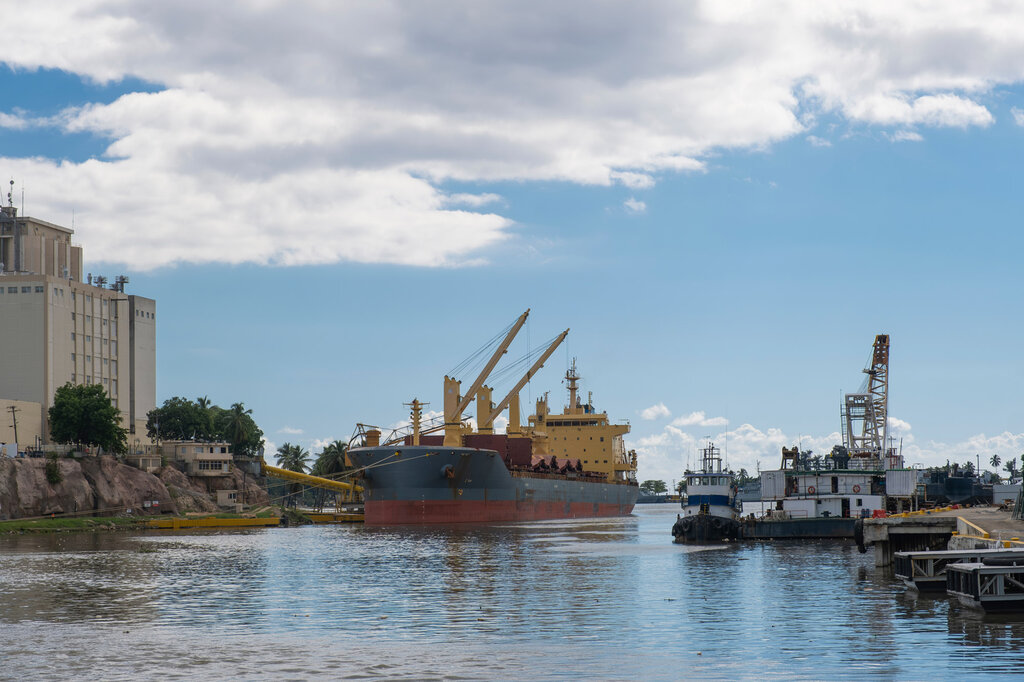
Credit: Elena Berd / Shutterstock.com
Recent investment of $380 million at Port Caucedo, the main container port, has upgraded quays, breakwaters, cranes, cargo-handling systems, security and road access, positioning the port as a highly efficient gateway for regional and international trade. DP World, incorporated in the Dubai International Financial Centre, operates an 86-hectare industrial and logistics park within the free-trade zone. A $760 million agreement with the Dominican government will expand the zone to 322 million hectares, adding 225,000 hectares of logistics, warehousing and manufacturing facilities.
Top benchmark in low-cost medtech manufacturing
The Dominican Republic has emerged as a competitive hub for medical device manufacturing. Leading subcontractors including Alumed, Sibaya BC Pharmed and Jabic Inc. operate state-of-the-art facilities in Bajos de Haina. Jabic’s plant alone covers more than 60,000 square feet, including 30,000 square feet of cleanroom space, and meets the strictest medical device production standards. Our benchmarking study highlights the country’s cost advantages. Logistics costs range from $50 to $55 per unit, labour averages $3 to $4 an hour, and energy costs remain at around $0.11 per kilowatt-hour. Compared with Mexico, where labour costs average $5 an hour and non-compliant products face a 25% tariff on shipments headed for the US, the Dominican Republic’s mix of advanced facilities, competitive costs and tariff exemptions makes it a compelling destination for medical device companies seeking efficient, reliable production with streamlined access to the US market. Other manufacturing hubs, including Vietnam, Thailand, Malaysia and Poland, face tariffs ranging from 10% to 19%.
Driving industrial diversification in the Dominican medtech sector
The Dominican Republic is accelerating the diversification of its industrial base and strengthening production capacity in response to tariff increases imposed by the Trump administration. The country faces two major challenges. First, it must maintain a highly skilled, continuously trained workforce. Second, the nation must address significant finance and infrastructure investment needs, constrained by two main obstacles: limited access to credit, with bank interest rates currently ranging from 12% to 18%, and a shortfall of private investment, estimated at tens of millions of US dollars each year.

Credit: PeopleImages / Shutterstock.com
These factors underscore the challenge of expanding the Dominican medtech industry while maintaining competitiveness in global markets. The solution lies in public-private partnerships. “ Partnerships between the private sector and the Ministry of Industry and Commerce have transformed Dominican free zones into key drivers of competitiveness and global opportunities”, says Claudia Pellerano, President of the Dominican Free Zones Association (ADOZONA). She adds, “This partnership represents the future because it has allowed us to seize new opportunities arising from the reconfiguration of global value chains and nearshoring. This shift presents both challenges and significant opportunities for our medical device industry.”
Strategic Trade Versatility: Dominican Republic navigates trade challenges with strategic measures
Although the Caribbean Basin Initiative (CBI), grants duty-free access to the US market for most products, the Trump administration imposed an additional 10% tariff on exports from partner trade agreement countries, including the Dominican Republic. In response, the nation has implemented six major initiatives to mitigate the impact of these tariffs on free zone exports.
- Maintaining and adapting tax incentives: Free zone companies continue to enjoy tax exemptions while adjustments ensure competitiveness in global markets.
- Investment support and expansion: The National Council of Free Zones (CNZFE) has approved investments worth $34.87 million to encourage business growth.
- Export enhancement: Initiatives have been launched to increase export capacity and market access for Dominican products.
- Transition to sustainable practices: Legislation now requires free zone data centres to obtain their energy from renewable sources.
- Infrastructure modernisation: The government is investing in industrial parks to improve efficiency and attract new business.
- SME development and innovation support: Through PROINDUSTRIA (Industrial Development and Competitiveness Center), the government is providing leased industrial space, support for innovation, and facilitating partnerships between universities and private business.
Strategic investments drive Dominican medtech expansion
The Dominican Republic is actively supporting the growth of its medical device industry through ProDominicana, the national investment agency. This offers tax incentives, facilitates access to international markets and supports innovation and research, positioning the country as a competitive hub for medical manufacturing.
According to the Latin America Foreign Direct Investment (LATAM FDI), a consortium of public institutions, multilateral organisations such as the Inter-American Development Bank (IDB), and private partners linked to investment and regional economic development, the government has invested US$1.580 billion since 2013 in the development of modern infrastructure, including specialised free zones, technical training centres and research facilities
At the Transporte, Logística y Zonas Francas Summit 2025, held on 12 June 2025 at the Real Intercontinental Hotel in Santo Domingo, Víctor Bisonó, Minister of Industry, Commerce and SMEs for the Dominican Republic, said:
“Dominican free-trade zones, leveraging their tax incentives and advanced logistics, serve as strategic cornerstones for developing the medical device and pharmaceutical sectors. They provide manufacturers with streamlined access to regional and international markets, promoting investment, innovation and high-value manufacturing in the Caribbean.”

Caption. Credit:
Total annual production
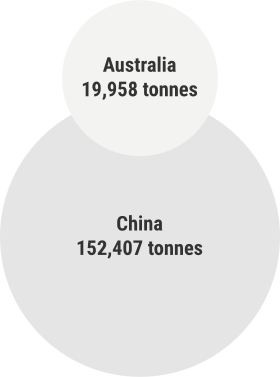
Australia could be one of the main beneficiaries of this dramatic increase in demand, where private companies and local governments alike are eager to expand the country’s nascent rare earths production. In 2021, Australia produced the fourth-most rare earths in the world. It’s total annual production of 19,958 tonnes remains significantly less than the mammoth 152,407 tonnes produced by China, but a dramatic improvement over the 1,995 tonnes produced domestically in 2011.
The dominance of China in the rare earths space has also encouraged other countries, notably the US, to look further afield for rare earth deposits to diversify their supply of the increasingly vital minerals. With the US eager to ringfence rare earth production within its allies as part of the Inflation Reduction Act, including potentially allowing the Department of Defense to invest in Australian rare earths, there could be an unexpected windfall for Australian rare earths producers.
